
Widely adopted in horticulture, reptile husbandry and seedling cultivation, coco peat bricks have become the mainstream lightweight growing medium. Many people wonder why the industry compresses loose coco peat and coir fiber into standardized bricks, given that raw coco peat is usable in its natural state. This process is not merely a morphological change; it is a comprehensive solution addressing logistics, warehousing, quality consistency and commercial distribution. Professional hydraulic molding equipment serves as the core technical foundation for this industrial solution.
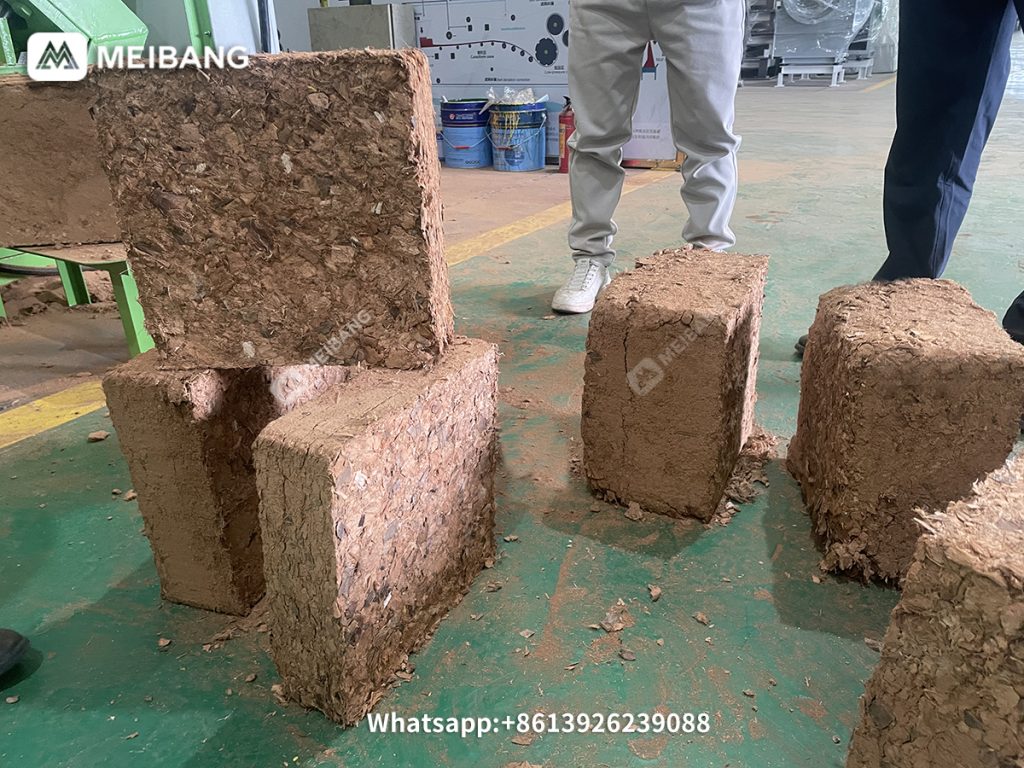
I. Core Benefits of Coco Peat Briquetting: Solving Inherent Drawbacks of Raw Materials
1. Extreme Volume Compression to Cut Logistics & Warehousing Costs (Core Advantage)
Raw coco peat features a loose texture, high internal porosity and extremely low bulk density, weighing only 30–50 kg per cubic meter and occupying enormous storage space. When transported in loose form, most space in trucks and shipping containers is occupied by air, leading to exorbitant unit freight costs.
After high-pressure compression via professional machinery, the volume of coco peat raw material can be reduced by 80%-90%, drastically lowering space occupancy for the same weight. A standard 5kg coco peat brick can expand 12–15 times its compressed volume after soaking in water. This doubles the loading capacity of trucks and containers, significantly reducing costs for both inland road transportation and cross-border ocean freight. Additionally, stacked coco peat bricks minimize floor space in warehouses, cutting rental expenses and greatly improving the comprehensive efficiency of storage and freight operations.
2. Sealed Molding Reduces Storage & Transportation Losses
Loose coco peat generates heavy dust and material leakage during handling and loading, causing environmental pollution and raw material waste. Exposed loose coco peat also absorbs moisture from air and rain, resulting in weight gain, mildew and deterioration. In contrast, compressed coco peat bricks feature a dense structure. With sealed packaging, they resist breakage and leakage during transit, effectively blocking external moisture and humidity to eliminate storage and transportation losses at the source.
3. Extended Shelf Life & Stable Material Quality
Loose coco peat contains abundant trapped air, which promotes mold growth and pest egg hatching in high-temperature and humid storage environments, leading to a short service life. High-pressure compression expels most internal air, destroying the conditions for microbial reproduction. Combined with airtight packaging, the shelf life is extended to 1–2 years. Before compression, raw materials are screened to remove hard debris and impurities, ensuring uniform fiber fineness, air permeability and water retention across all bricks, and eliminating quality inconsistencies between batches of loose coco peat.
4. Standardized Specifications for Retail & Precision Application
Loose coco peat is cumbersome to weigh and repackage with severe dust emission, making it unsuitable for end-user retail. Compressed coco peat bricks feature fixed specifications. Users only need to soak the bricks in water for 10–20 minutes for full expansion, enabling clean, dust-free application. Standardized sizing perfectly fits e-commerce platforms, agricultural stores and horticultural markets, allowing consumers to purchase according to planting needs with lower usage thresholds.
II. How Are Coco Peat Bricks Made? Core Functions of Professional Briquetting Equipment
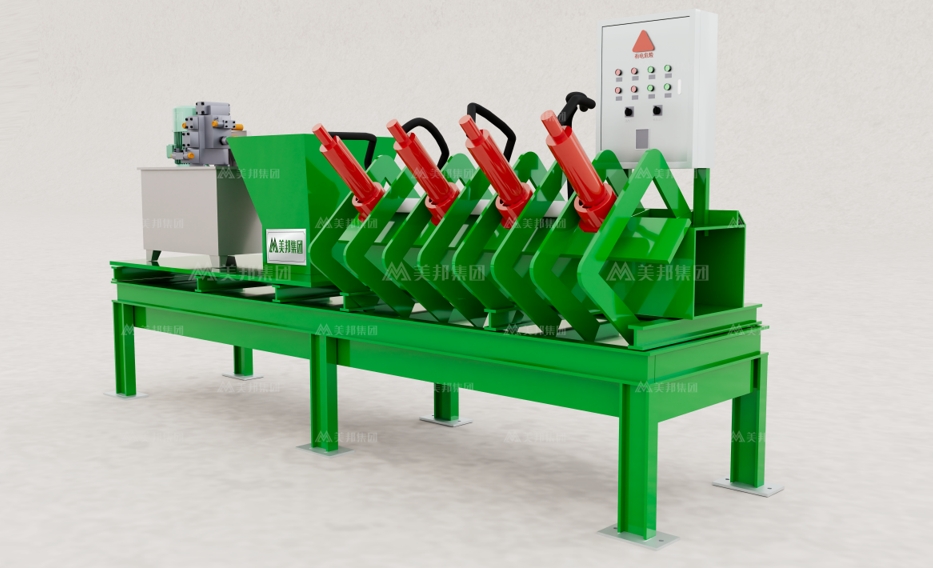
High-precision, high-ratio compression molding of coco peat relies on dedicated industrial equipment. Meibang coco peat briquetting machines are professionally developed for industrial demands, capable of fully automatic production of two mainstream specifications: 5kg and 650g coco peat bricks, perfectly matching the needs of mass industrial production and end retail markets.
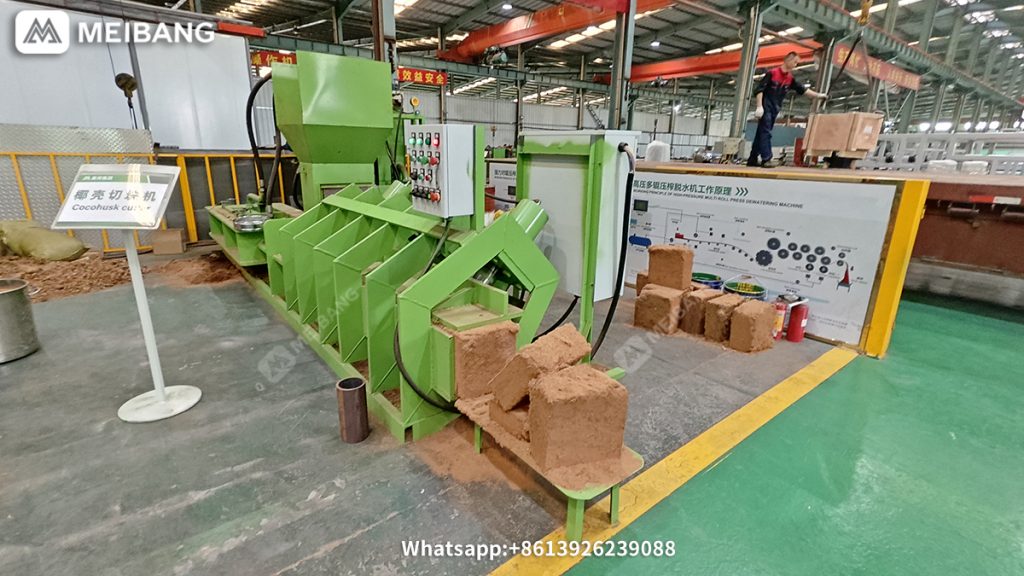
Meibang coir fiber molding machines are high-performance hydraulic presses customized for low-density, high-bulk loose biomass materials including coco peat and coir fiber. Driven by a heavy-duty hydraulic system, the equipment compresses raw coco residue and coir fiber by 80%-90% in volume, fundamentally solving the inherent problems of coir fiber such as loose texture, low density and excessive space occupation. It substantially reduces warehouse occupancy and cross-border logistics costs, delivering remarkable improvements in comprehensive storage and freight benefits.
The machine realizes full-automatic operation including feeding, pressurization, molding and brick ejection. It delivers precise and controllable compression ratios, producing dense, structurally stable bricks that resist disintegration. It also reduces labor costs and adapts to large-scale mass production. Processing raw, hard-to-transport coco materials into standardized 5kg and 650g coir bricks creates a full industrial chain covering low-cost storage & transportation, standardized sales and stable end-use performance.
III. Comparative Analysis: Compressed Coco Peat Bricks vs. Loose Raw Coco Peat
| Comparison Item | Hydraulically Compressed Coco Peat Brick | Raw Loose Coco Peat |
| Logistics Cost | Extremely low; 80%-90% volume reduction with high container loading rate | Very high; bulky and space-wasting with severe freight waste |
| Warehouse Occupancy | Stackable with minimal space occupation | Bulky piling leading to low warehouse utilization |
| Dust Pollution | Sealed molding with nearly zero dust emission | Severe dust during handling and repackaging causing pollution |
| Shelf Life | Air-blocked, moisture & mold resistant; 1-2 year storage life | Prone to moisture, mold and pests with short storage period |
| Quality Stability | Uniform specifications and consistent fiber composition | Large batch deviations with mixed coarse and fine fibers |
| Sales & Application | Standard size, ready-to-use after soaking, clean & convenient | Troublesome weighing & repackaging with poor user experience |