Coconut coir, a valuable byproduct of coconut processing, has become a critical resource in global horticulture and agriculture due to its excellent water retention, aeration properties, and biodegradability. However, Indian coconut coir processors often face a major challenge: high moisture content in coir after washing and desalination. This not only hinders storage and transportation but also affects product quality and increases operational costs. To address this pain point, a leading Indian coconut coir processor partnered with Meibang, and our coconut coir dewatering machine has been successfully installed, commissioned, and officially put into operation at their site—delivering exceptional results that exceeded the customer’s expectations.
The Challenge: High Moisture Content Plagues Coconut Coir Processing in India
Coconuts grown in coastal regions of India naturally absorb high levels of salts, including sodium and potassium, which are harmful to plant growth if not removed. Washing and desalination are essential steps to reduce these salt levels, but this process leaves the coconut coir with extremely high moisture content—often between 70% and 85%. Traditional drying methods, such as sun-drying, are time-consuming, weather-dependent, and inefficient, especially during India’s monsoon seasons, leading to inconsistent product quality and delayed production schedules.
The Indian customer needed a reliable, efficient solution to: reduce the moisture content of washed and desalinated coconut coir to a stable, usable level; maintain the integrity of the coir fibers to preserve product value; and improve processing efficiency to meet growing domestic and international demand for high-quality coconut coir.
The Solution: Meibang Coconut Coir Dewatering Machine with High-Pressure Double-Roller Press
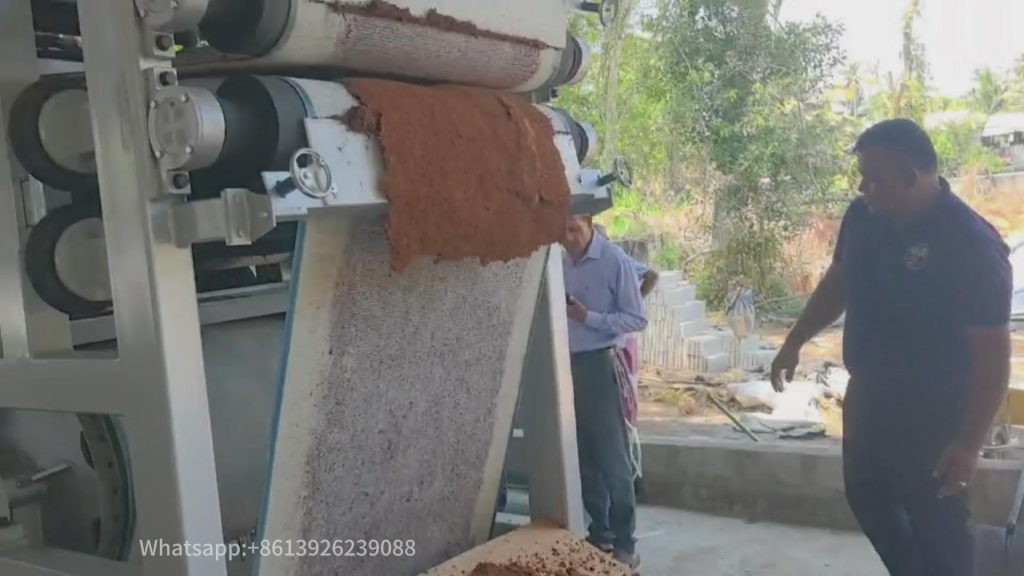
After evaluating multiple options, the Indian customer chose Meibang’s coconut coir dewatering machine, paired with our high-pressure double-roller press—an integrated solution designed specifically for the unique needs of coconut coir processing. Meibang’s equipment stands out for its advanced technology, durability, and ability to deliver consistent, efficient results, even in the harsh operating conditions of Indian processing facilities.
Key features of Meibang’s solution that addressed the customer’s challenges:
- Targeted Dewatering for Washed Coir: The equipment is optimized to handle coconut coir after washing and desalination, directly targeting the excess moisture that plagues traditional processing methods. Unlike generic dewatering machines, it is designed to work with the fibrous texture of coconut coir without damaging its structure.
- High-Pressure Double-Roller Press: The integrated high-pressure double-roller press applies controlled, uniform pressure to squeeze out excess moisture efficiently. This technology ensures that the moisture content of the discharged coir is significantly reduced, eliminating the need for lengthy sun-drying and reducing energy costs.
- Consistent and Reliable Performance: Meibang’s dewatering machine operates continuously, supporting large-scale production needs with minimal supervision. Its automated design reduces labor dependency and ensures consistent moisture levels in every batch, meeting the strict quality standards required for horticultural and agricultural applications.
- Easy Installation and Maintenance: The machine was installed and commissioned by Meibang’s professional technical team, ensuring a smooth setup process with minimal downtime. Its robust design and user-friendly interface make daily operation and maintenance simple, even for non-technical staff.
The Results: Exceptional Performance, Customer Satisfaction, and Operational Efficiency
Since its official commissioning, Meibang’s coconut coir dewatering machine has delivered outstanding results for the Indian customer:
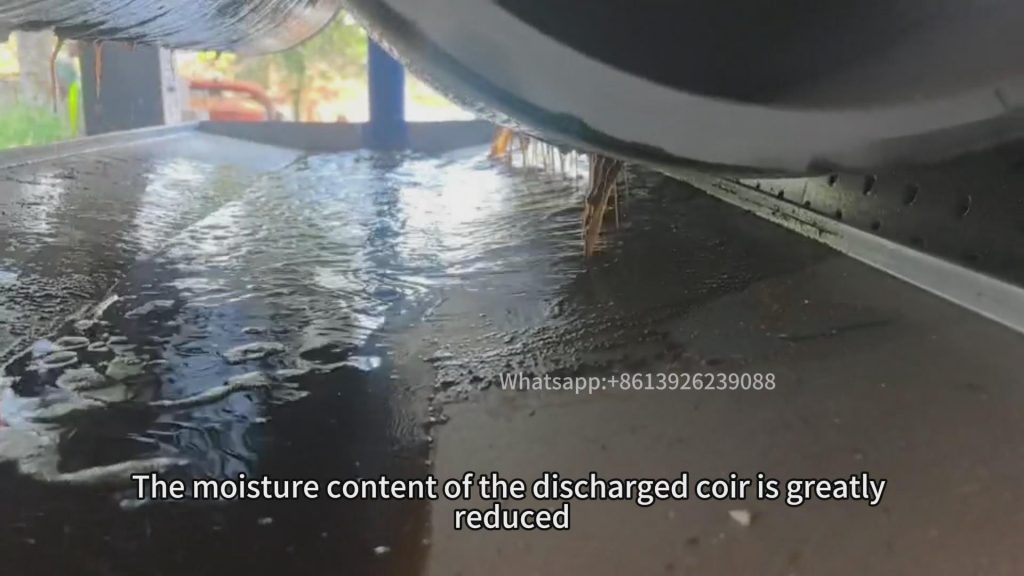
- Significant Moisture Reduction: The high-pressure double-roller press has successfully reduced the moisture content of the discharged coconut coir to the customer’s target level—eliminating the issues of mold, spoilage, and high transportation costs associated with wet coir. This has also accelerated the subsequent processing steps, such as drying and packaging.
- Meeting Quality Standards: The dewatered coir maintains its fibrous structure and low salt content (EC value below 0.5 ms/cm), making it suitable for use in horticultural substrates, soil conditioners, and other high-value applications. This has helped the customer expand their market reach and compete in international markets.
- Improved Operational Efficiency: By replacing traditional sun-drying with Meibang’s mechanical dewatering solution, the customer has reduced processing time by up to 60%, increased daily production capacity, and eliminated weather-related delays. This has translated into lower operational costs and higher profit margins.
- High Customer Recognition: The consistent performance, reliability, and efficiency of Meibang’s equipment have earned high praise from the Indian customer. They have expressed full satisfaction with the results, noting that the machine has exceeded their expectations and become a critical part of their production line.
Why Meibang for Coconut Coir Dewatering in India?
India is one of the world’s largest producers of coconut coir, and the demand for efficient processing equipment is growing rapidly. Meibang’s coconut coir dewatering solutions are tailored to the unique needs of Indian processors, offering:
- Proven expertise in coconut coir processing technology, with successful projects across South Asia, including India and Sri Lanka.
- Customizable equipment designed to handle different coir types, moisture levels, and production capacities.
- Comprehensive after-sales support, including installation, commissioning, training, and lifelong maintenance, ensuring long-term equipment reliability.
- Environmentally friendly and energy-efficient designs, aligning with global sustainability trends in agricultural processing.